

|
Little Disclaimer
 Assalamualaikum & Hello , thanks for visited my blog ^^ Im Nurul Athirah. Tieraa for short. Im 14 and study in the class 2 Bakti May enjoy and fun in my blog Please leave a comments after read my entry. Don't be shy ^_^V Tagboard
 |
History of Blogger
Sunday, July 1, 2012 | 7:17 AM | 0 Dreams will come true!

Blogging is the most passionate term for a blogger and this is the reason why blogs have become essential branch of our online society. Blogs are turning out to be a major source of education. Practically everyone prefers to read blogs, either they are official blogs (From a Specific Brand) or any other blog associated with a specific niche i.e. Entertainment, Education, Blogging, Traditional, Tips and etc. This is the reason why everyone has at least one favorite blog. The word blogging is not an ancient term, which means Blogs have gained the sparkling attention in fairly short time. And it’s only past 10 to 15 years that blogs have taken off handsomely and have become a central part of our online community.
As currently we are in the 21st century the era known for information technology blogger are becoming central branch of learning so it is essential that we must learn who planted the tree of blogging and now what strategies are adopted to make this tree ever refreshing.
The Early Stage Of Blogging From 1990s to 1999  1994 First Ever Blog Created: The First ever web Blog Links.net was created by Justin Hall in 1994, who was the student of Swarthmore College. For sure, at that time it was not named as blog. As he just referred it as his personal homepage (Biography)  1997 Invention of the Term “Weblog”: In 1997 the term weblog came into being. It was introduced by Jorn Barger, who himself was a blogger. The term weblog was created to reflect a "log" of the web (A Personal Diary of an author where he shares his personal experience with others)  1999 Word “Blog” Came into existence: In 1999 an intelligent programmer Peter Merholz created an ingenious word “BLOG”. Being a thoughtful guy, he just renamed “Weblog” to “Blog” which was later accepted as the word of the year by Merriam-Webster  On August 23, 1999, blogger.com the first ever blogging platform was introduced by Pyra Labs it was the earliest and most enthusiastic blogging tool for publishers. In February 2003, Google.inc acquired blogger.com from Pyra Labs and hence one after another a never ending wave of achievement started for blogger.com. And till now blogger.com is one of most prominent and reliable platform for bloggers which allowed them to send their voice to the entire world. History of Twitter
| 6:58 AM | 0 Dreams will come true!
Jack Dorsey
In 2000, Jack built a basic prototype that allowed him to update what he was doing to his friends through his Blackberry and via an email messaging system. He quickly got it built and took it out to test it in Golden Gate park in San Francisco, updating to all his friends where he was at. He quickly figured out two things. The first was, no one cared about what he was doing at that time. The second, was there was no easy way for them to update or respond back. Not everyone had a device that made it easy for them to push updates. With that, Jack felt the idea wouldn’t work and put the idea aside. Later, he went to work for a podcasting company called Odeo. Odeo was co-founded by Evan Williams, founder of Blogger, who sold Blogger to Google. Evan eventually left Google to start up Odeo and although Jack had no interest in podcasting, he knew of Evan Williams and wanted to work with him. There, he met his future Twitter cofounders, other employees at Odeo at the time. He soon realized that no one there was into podcasting, which was kind of ironic because they all worked at a podcasting company. But it didn’t matter. Shortly after Jack joined, Apple announced that they were going to release free podcasting through iTunes. This basically put Odeo out of business.
With roughly no clue on what they would do, Jack revisited the idea of doing updates, what it was referred to at the time. With the rise of SMS usage and in 2006, for the first time you could send SMS messages across different carriers, he felt that there was a chance for the idea to thrive. He convinced Evan to allow him to work on building this prototype over two weeks and by the end of this two week period, he invited all his fellow cofounders to jump on and try the system. Eventually they invited close friends and family to join in and from there, Twitter was born. I believe the 140 character limit was due to the fact that SMS messages had a 140 character limit and till this day, it just works that way. At first, they couldn’t come up with a really good name for it. They thought about how when you get an update, your phone would vibrate and they wanted to play around words that conveyed a message off that feeling. They thought about “twitch” or “jitter” but neither sounded good. Eventually, one team member decided that twitch wasn’t going to work out but maybe another word starting with tw would. So he opened up the Oxford Dictionary and went down the list to find other words starting with tw. When they came across Twitter, they found one definition of “a short burst of inconsequential information”. It was perfect. They bought the domain for roughly $7,000 and the rest was history. History of Facebook
| 6:41 AM | 0 Dreams will come true!
“How much crazy is there in today ‘s youth about facebook”
Facebook history and why are people crazy about it?.Even from a small child to a professional business man seems addicted to facebook.People are dieing to know History of facebook .People want to know facebook history.We loved the history of Facebook and the majority of the population got a kick from the story of facebook founderMark Zuckerberg.
A 19-year-old year boy Mark Zuckerberg released the website as a Stanford sophomore on Feb 4, 2004.Then known as “thefacebook.com,” the website was an quick hit. Now, six decades later, the website has become one of the greatest web sites in the world, frequented by 400 thousand individuals a month.Just six days after the website released, three Stanford senior citizens, Cameron Winklevoss, Tyler Winklevoss, and DivyaNarendra, charged Zuckerberg of deliberately inaccurate them into knowing he would help them develop a sociable networking known as HarvardConnection.com, while he was instead using their thoughts to develop a competitive product.
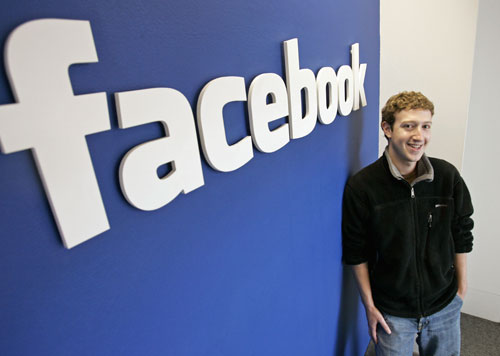
Mark Zuckerberg

Mark Zuckerberg – CEO and Founder of Facebook, which is founded in 2004.
Mark was charged by three Stanford senior citizens of having thieved the concept from them.This claim soon bloomed into a full-fledged suit, as a competitive organization established by the Stanford senior citizens charged Level and Mark for robbery and scams, starting a legal journey that constantly this day.New details discovered by Rubber Street Core indicates that some of the problems against MarkZuckerberg are legitimate.The primary contest around Facebook’s roots based around whether Mark had joined into an “agreement” with the Stanford senior citizens, Cameron and Tyler Winklevoss and a classmate known as DivyaNarendra, to create a similar website for them — and then, instead, delayed their venture while taking their concept and building his own.
The suit never went particularly well for the Winklevosses.
In 2007, Boston Assess Douglas P. Woodlock known as their suggestions “tissue slim.” Mentioning the agreement that Level had purportedly breached, Woodlock also had written, “Dorm room chit-chat does not make a agreement.” A season later, the end finally seemed in sight: a judge decided against Facebook’s move to disregard the situation. Quickly thereafter, the events decided to negotiate.
But then, a perspective.
After Facebook declared the agreement, but before the agreement was completed, legal professionals for the Winklevosses recommended that the disk from Level Zuckerberg’s computer at Stanford might contain proof of Mark’s scams. Particularly, they recommended that the disk involved some frightening mail messages and mail messages.
The judge in the situation rejected to look at the disk and instead postponed to another judge who went on to accept the agreement. But, normally, the opportunity that the disk involved additional proof set searching thoughts thinking what those mail messages and IMs unveiled. Particularly, it set searching thoughts thinking again whether Mark had, in fact, thieved the Winklevoss’s concept, attached them over, and then ridden off into the sundown with Myspace.
Unfortunately, since the material of Mark’s disk had not been unveiled, no one had the solutions.
Membership rights was at first limited to learners of Harvard College, and within the first month, more than half the undergrade inhabitants at Harvard was authorized on the service. Eduardo Saverin (business aspects), Dustin Moskovitz(programmer), Tim McCollum (graphic artist), and Bob Gaines soon authorized Zuckerberg to help enhance the website. In Goal 2004, Myspace extended to Stanford, The philipines, and Yale. This development ongoing when it started out to all Ivy Group and Birkenstock boston area educational institutions, and progressively most colleges in North america and the U. s. Declares.Facebook included in the summer season of 2004 and the business owner He Parker, who had been informally counseling Zuckerberg, became the organization’s chief executive. In May 2004, Facebook shifted its platform of functions to Palo Alto, Florida. The company slipped The from its name after buying the website Facebook.com in 2005 for $200,000. Facebook founders Mark Zuckerberg grew the college dorm room startup to a global tech giant with more users than most countries populations. |


 Tutorials
 Tutorial:
  Freebies: